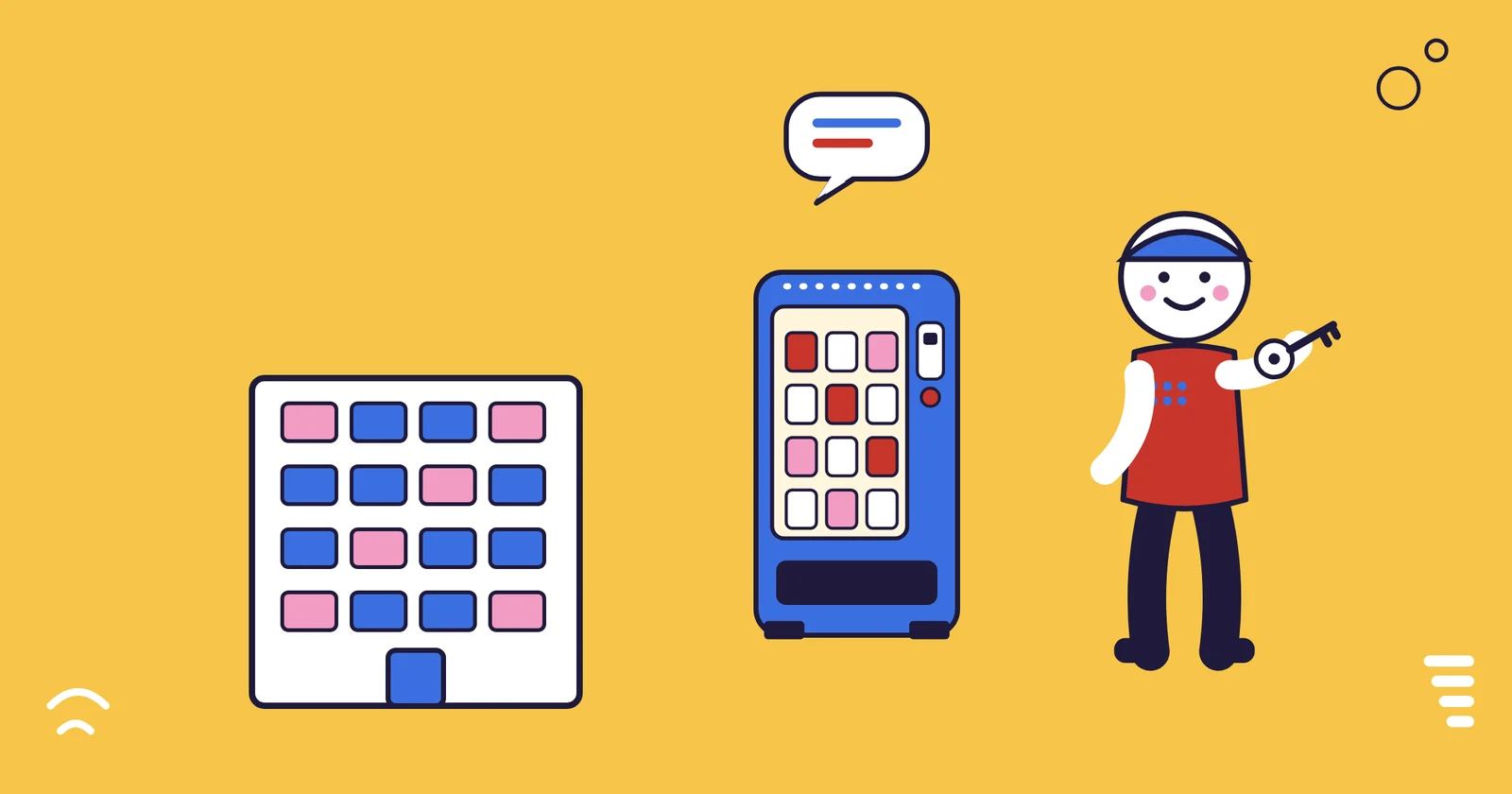
Tenants can choose: their own machine or the building's.
- Two options, different owners
- Building machines: simple, but shared
- Your own machine: more control, more responsibility
- Check the lease and the building rules first
- A machine or a vending fridge
- Space, power, and access
- How your team pays
- Talk to your team before deciding
- Neighbors and shared spaces
- When your company moves or grows
- What to check before you decide
- Choosing what fits
- FAQ
Your company rents two floors in an office building. There is a vending machine in the lobby, next to the elevators, and a few people from your team use it. Others complain that it is always out of their favorite drink, that it is a long walk, or that it does not take their company card. Someone asks whether you could simply get your own machine. This post looks at that question from the tenant's side. It compares a machine in your own space with the machines in the building's common areas, and it lists what to check before you decide. We will not tell you which option is better, because that depends on your team, your lease, and your building. We will show you how to weigh it.
Two options, different owners
In a multi-tenant building, vending can work in two quite different ways. The first is the building's own machines, usually placed in common areas such as the lobby, corridors, or a shared kitchen. The building manager arranges them with an operator, and every tenant's employees can use them. The second is a machine or a vending fridge that your company orders for its own space. You arrange it with an operator, it stands in your office, and it serves your people. Both can work well. The difference is mainly about who decides, who pays, who is responsible, and who benefits. Before you choose, it helps to see clearly which of those questions matter most to your company.
Building machines: simple, but shared
The building's machines have one big advantage: you do not have to do anything. There is no separate agreement for your company, no space to give up, and no one on your team who has to deal with the operator. Your employees just walk over and buy what they need. The trade-off is control. The range is set for the whole building, not for your team. If your people work late, want healthier snacks, or need more drinks, you can ask, but the decision is not yours. The machine may also be busy at peak times, when several companies take a break at once. If you are happy with what the building offers, this is the easiest option. If people keep complaining, it may be time to look at the alternative.
Your own machine: more control, more responsibility
A machine in your own space gives you influence over what it offers and how it works. You can agree the range with the operator based on what your team actually wants. You can place it where people really need it, such as a kitchen on your floor, instead of next to the lobby. You may also be able to choose how purchases are paid, including models where the employer covers part of the cost. In return, you take on more. Someone in your company has to be the contact for the operator, agree the terms, and handle feedback. You give up some floor space. Permission from the building is also needed, and that depends on the lease.
Check the lease and the building rules first
Before talking to any operator, check what your lease and the building's house rules say. Some buildings allow tenants to install their own machines freely, some require the manager's consent, and some have arrangements that limit vending to a chosen operator. We cannot tell you which applies to you, because it depends on the specific documents. Read the relevant parts of the lease, or ask your office manager or legal team to check them. Then talk to the building manager. Explain what you have in mind: the type of machine, where it would stand, and how it would be serviced. A short, early conversation usually goes better than asking for forgiveness after a machine has already appeared in your kitchen.
A machine or a vending fridge
If you decide on your own unit, the next question is what kind. A classic spiral machine works well for drinks and packaged snacks. A vending fridge, where people open the door, take what they want, and pay at a screen or with an app, can suit fresh food such as sandwiches or salads. Each has its own needs for space, restocking, and payment. A fridge may feel more like a small shop. A machine may feel more familiar to occasional users. Ask the operator what they offer and what they would recommend for your team's size and habits. Ask to see a working example if possible. The right choice depends less on the equipment itself and more on what your people actually want to eat and drink at work.
Space, power, and access
A machine needs more than a free corner. It needs a suitable power socket, enough space around it for ventilation, a floor that can carry its weight, and a route for the operator to bring it in and restock it. The exact requirements are in the machine's manual and on its rating plate, and an electrician should confirm the socket. In an office building, access matters too. How will the route driver get to your floor? Do they need a pass, an escort, or a booked service elevator? Can they come during working hours without disturbing meetings? Agree these details with the operator and the building manager before installation. The post on technical requirements for a site covers this side in more detail.
How your team pays
One reason tenants choose their own machine is control over payments. With your own unit, you can discuss options with the operator, such as card and phone payments, employee badges, or a setup where the company pays for part of each purchase. Some payment systems allow such subsidies, but not all of them, so ask what the specific machine and operator support. How a subsidy is set up and recorded in your company's books is a question for your finance team or accountant, not for the operator. With building machines, you usually have no say in payment options. If your team strongly prefers one way of paying, that alone can tip the decision toward your own machine.
Talk to your team before deciding
It is easy to assume what employees want. It is better to ask. A short survey or a quick chat at a team meeting can tell you a lot. Do people use the building's machines now? What do they miss? When do they need something, and what kind of thing? Would they use a machine on your floor, or is the lobby close enough? The answers might surprise you. Sometimes the complaints come from two loud voices, and most people are fine. Sometimes the whole team quietly walks to a shop across the street every afternoon. Either way, you will make a better decision, and you will have something concrete to share with the operator if you go ahead.
Neighbors and shared spaces
If your own machine stands in a space only your team uses, the situation is simple. If it stands near a shared corridor or a kitchen used by other tenants, things get more complicated. Can employees of other companies use it? If you subsidize purchases, will that work only for your people? Who handles complaints if someone from another company has a problem? Talk to the building manager about this before choosing a spot. In many cases, the easiest solution is to place your machine inside your own premises. It keeps the arrangement clear and avoids awkward situations in the elevator lobby.
When your company moves or grows
Office needs change. A team grows, shrinks, or moves to another floor. Some companies leave the building altogether. If you have your own machine, think ahead about what happens then. Can the agreement be adjusted if your headcount changes a lot? Can the machine be moved, and who pays for it? What happens if you end your lease before the vending agreement ends? These are questions to ask the operator and to show your lawyer before signing. With building machines, you do not have to think about any of this. That is part of the trade-off between simplicity and control.
What to check before you decide
Use this short list to compare the two options for your company.
- What the lease and building rules say about tenants' own machines.
- Whether the building manager agrees, and on what conditions.
- Whether the space has suitable power, ventilation, and access.
- How the operator would reach your floor and when.
- Which payment options your team needs, including any employer subsidy.
- Who in your company would be the operator's contact.
- How the agreement with the operator would be billed and ended.
For questions about the lease or the operator agreement, ask your lawyer. The page on corporate services (publisher's site) covers typical office setups.
Choosing what fits
There is no single right answer. A small team in a building with good shared machines may never need its own. A larger company with shift work, specific needs, or a long walk to the lobby may find its own machine well worth the effort. The key is to look at your situation honestly: who uses vending now, what they miss, what the building allows, and how much responsibility you want to take on. Start with the lease and a conversation with the building manager. Then talk to your team. After that, the choice usually becomes much clearer than it seemed at the start. And if the first choice turns out wrong after a few months, it can usually be changed, as long as you know from the start how the operator agreement ends.
FAQ
Is the building manager's consent needed? It depends on the building rules and your lease. Check those documents and talk to the manager before ordering anything.
Can the employer subsidize purchases? Some payment systems allow it. Ask the operator what the machine supports, and ask your accountant how to set it up.
Can a tenant ask for changes to the building's machines? Yes, you can pass feedback to the building manager. The decision stays with the building and its operator.
Who restocks a tenant's own machine? Usually the operator, on a schedule agreed with you. Agree access to your floor in advance.