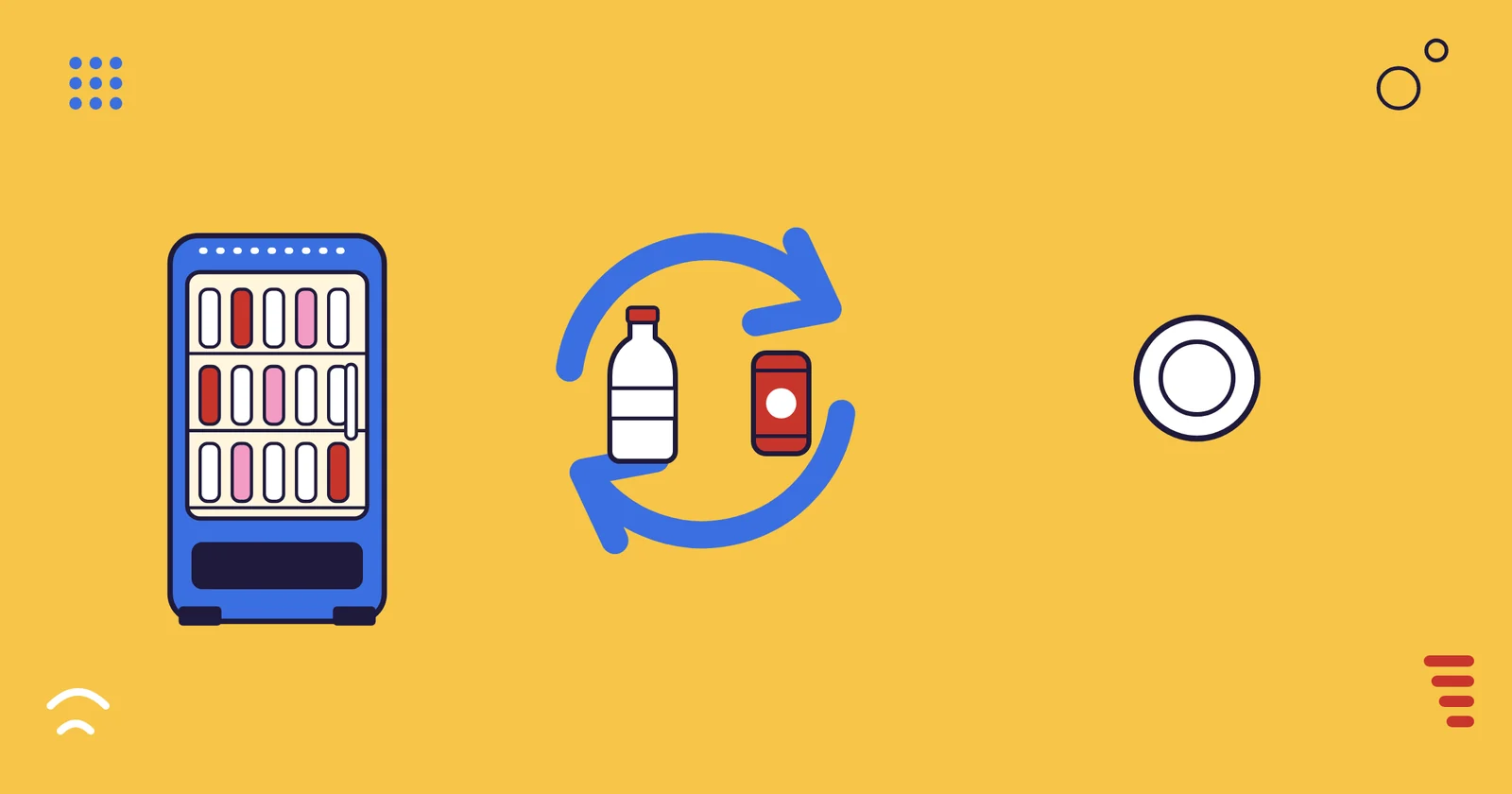
The deposit system covers certain drink containers. Vending operators should check how it applies to their sales.
- What the deposit return system is
- What to check
- Reviewing your range
- Talking to your supplier
- The deposit on the screen and selection
- Payment system settings
- Taking back containers
- Recording deposits
- Talking to the site owner
- Communicating with customers
- Bins and tidiness around the machine
- Planning your range
- Coffee machines and cups
- A cost and margin spreadsheet
- All at once or in stages
- Talking to the machine maker
- Seasons and sites
- Internal notes
- Training technicians
- Questions for your advisor
- As your business grows
- Common mistakes
- How to prepare
- What this article does not cover
- Range
- FAQ
A customer picks a bottle of water at a vending machine and sees two amounts on the screen: the price of the drink and the deposit. For some, this is obvious; for others, it is a surprise. For an operator, it is a topic that touches the range, machine settings, accounting, and conversations with site owners. This article outlines what the deposit return system means for vending machines and suggests how to prepare for it in practice. It does not replace legal or tax advice. It helps you organize the topic and ask your advisor the right questions.
What the deposit return system is
The deposit return system, governed by Articles 40g–40p and 44 of the Polish Packaging and Packaging Waste Act, covers single-use plastic bottles up to 3 l, metal cans up to 1 l (deposit PLN 0.50), and reusable glass bottles up to 1.5 l (deposit PLN 1.00). The deposit is charged when the drink is sold and shown separately – it is not part of the product price or the VAT taxable amount. Confirm with an advisor how the rules on points of sale apply to vending machines. That last sentence matters, because a vending machine is an unusual point of sale and not every answer is obvious.
What to check
When getting the topic in order, it helps to answer a few questions:
- which containers in the range carry a deposit,
- how to show the deposit separately, next to the price,
- whether take-back applies,
- how to record deposits.
Below we go through each point in practical terms. Where the answer depends on the rules and your situation, we say who to ask.
Reviewing your range
The first step is a list of the drinks you sell. For each product, note the container type, its size, and what the producer or supplier says about whether it is covered. Covered containers are usually marked, but it is better to confirm with the supplier than to guess. The list will be useful for machine settings, conversations with your accountant, and purchase planning. Update it with every range change.
Talking to your supplier
Suppliers often already have information on which products carry a deposit. With your next order, ask:
- which products in their range are covered,
- how the deposit is shown on the invoice,
- whether they offer drinks in containers the system does not cover,
- whether they plan packaging changes.
Note the answers alongside the supplier's details. They will make it easier to set up machines and accounting.
The deposit on the screen and selection
The deposit is shown separately, next to the price. In practice, the customer should see how much they pay for the drink and how much the deposit is. How to do this technically depends on the machine and payment system. Some machines can show a separate line on the screen; others need a clear label at the selection. Ask the machine maker or your service provider what your machine can do. Check how the amounts look from the customer's side before rolling out changes to all machines.
Payment system settings
The deposit is an extra amount in the transaction, so the payment system must handle it correctly. Talk to your payment terminal or telemetry provider about how the deposit appears in sales reports. Ideally, it can be easily separated from drink sales revenue. Test a few transactions on one machine, check what the customer sees and what appears in the report, and only then roll out the changes more widely.
Taking back containers
Must a machine take back empty bottles? Smaller points of sale must charge the deposit, while taking back bottles and cans is optional for them (reusable glass is different). Check with an advisor how these rules apply to vending machines. If your range has no reusable glass, your situation may be simpler, but it is still worth confirming. Whatever your duties, it helps to know where near the site customers can return containers, because they often ask.
Recording deposits
The deposit is not part of the product price or the VAT taxable amount, so it needs to be handled separately in your accounts. Agree with your accountant exactly how to record it. Give them sample supplier invoices, a machine sales report showing deposits, and a description of how the deposit appears on screen. This makes it easier to settle on a booking method and avoid corrections later.
Talking to the site owner
The site owner may have questions about the deposit system, especially if customers leave empty bottles by the machine or ask about deposit refunds at reception. Agree in advance who looks after the bins by the machine, where empty containers go, and how customers are informed. If the site's commission is based on sales, also agree whether the deposit counts toward it. This is a contract matter worth writing down clearly.
Communicating with customers
Customers get used to deposits, but at first they may be surprised by a higher amount on the screen. A short, clear notice at the machine helps: that the deposit is charged separately and, if you know the options nearby, where containers can be returned. You do not need to explain the rules to customers. It is enough that the amounts are clear and the notice simple.
Bins and tidiness around the machine
Empty bottles with a deposit have value, so customers throw them away less often, but some containers will still end up in the bins by the machine. Agree with the site owner who empties the bins and how often. If the building has sorting containers, place them near the machine. Tidiness around the machine shapes how customers see the whole spot.
Planning your range
The deposit system may change which drinks are worth keeping in the machine. Look at your sales and check whether customers changed their choices after deposits were introduced. You may find that smaller or larger containers sell better at some sites. Test changes on a few machines and compare results with the earlier period. Decisions based on data are usually better than decisions based on hunches.
Coffee machines and cups
Not every machine sells drinks in bottles or cans. Hot-drink machines usually serve into cups, while the scope of the system described above concerns bottles and cans. If you run different kinds of machines, mark on your list which ones the deposit topic concerns and which it does not. That way, technicians and your accountant know what to look for in reports, and you do not change settings where there is no need.
A cost and margin spreadsheet
The deposit is not sales revenue, but it affects cash flow in your business. A simple spreadsheet that shows drink sales, deposits charged to customers, and deposits paid to suppliers separately helps. This split lets you assess your drink margin calmly without confusing it with amounts that only pass through the business. Agree with your accountant exactly how to settle these amounts.
All at once or in stages
Rolling out changes to many machines at once is tempting but risky. It is better to work in stages: one test machine first, then one site, and finally the rest. At each stage, check the screen, the reports, and customer reactions. Note what worked and what needed fixing. That note will save time with the next machines.
Talking to the machine maker
The machine maker or service provider knows best what the machine's software can do. Ask whether the deposit can be set up as a separate line, how it shows on screen and in reports, and whether a software update is needed. With older machines, a clear label at the selection may turn out to be the simpler solution. Note the answers for each model in your fleet.
Seasons and sites
Bottled drink sales change through the year. In summer, they rise at many sites, and with them the number of deposit containers and customer questions. Before the season, check that machine settings are correct, that the bins by the machines are big enough, and that site owners know how to answer questions. At sites open only part of the year, such as sports venues, plan these things before each opening.
Internal notes
A short internal note on how your business handles deposits makes life easier for new staff. Record which products are covered, how the deposit is set up on each machine model, who is responsible for reports, and what was agreed with your accountant. Update the note with every change.
Training technicians
Technicians often hear questions from customers and site owners first. They should know how the deposit looks on screen, how to answer basic questions, and who to refer harder ones to. A short instruction with the key information is enough. Technicians should also report it if they notice the screen or labels showing amounts incorrectly.
Questions for your advisor
Before talking to your advisor or accountant, prepare a list of questions. For example:
- how the rules on points of sale apply to my machines,
- whether and when I have to take back containers,
- whether I need an agreement with the system's representative entity,
- how to book deposits charged and passed on,
- how to show the deposit on screen and in reports.
Bring your product list, sample invoices, and a sales report. This shortens the conversation and reduces the risk of misunderstandings.
As your business grows
As the number of machines grows, so does the number of deposit transactions and containers customers ask about. At a larger scale, check from time to time that machine settings are consistent, that reports separate deposits correctly, and that site agreements still match practice. The rules change too, so check their current wording regularly.
Common mistakes
A few problems come up especially often:
- including the deposit in the product price instead of showing it separately,
- no list of covered products,
- changing settings on all machines without a test,
- no agreement with the accountant on recording,
- no arrangements with the site owner on bins and commission.
Each of these is easier to avoid than to fix later.
How to prepare
If you are getting deposits in order in your business, you can start with a few steps:
- list the products and containers in your range,
- confirm with suppliers which are covered,
- check what your machines and payment system can do,
- test the settings on one machine,
- agree on recording with your accountant,
- talk to your site owners,
- go over open questions with an advisor.
A review like this lets you introduce changes calmly and without surprises.
What this article does not cover
This is a general overview. It does not cover in detail the duties of representative entities, container marking rules, deadlines, or settlement methods. It does not decide how the rules on points of sale apply to a specific machine. Those matters depend on your business and the current rules.
Range
See the products page (publisher's site) for the range.
Related reading: The Sugar Levy and Vending Drinks.
FAQ
Must a machine take back empty bottles? Smaller points of sale must charge the deposit, while taking back bottles and cans is optional for them (reusable glass is different). Check with an advisor how these rules apply to vending machines.
Is this article legal advice? No. It is a general overview.
This article is general information only and is not legal or tax advice. Rules change – check the current rules or consult a lawyer, an accountant, or a tax advisor before deciding.