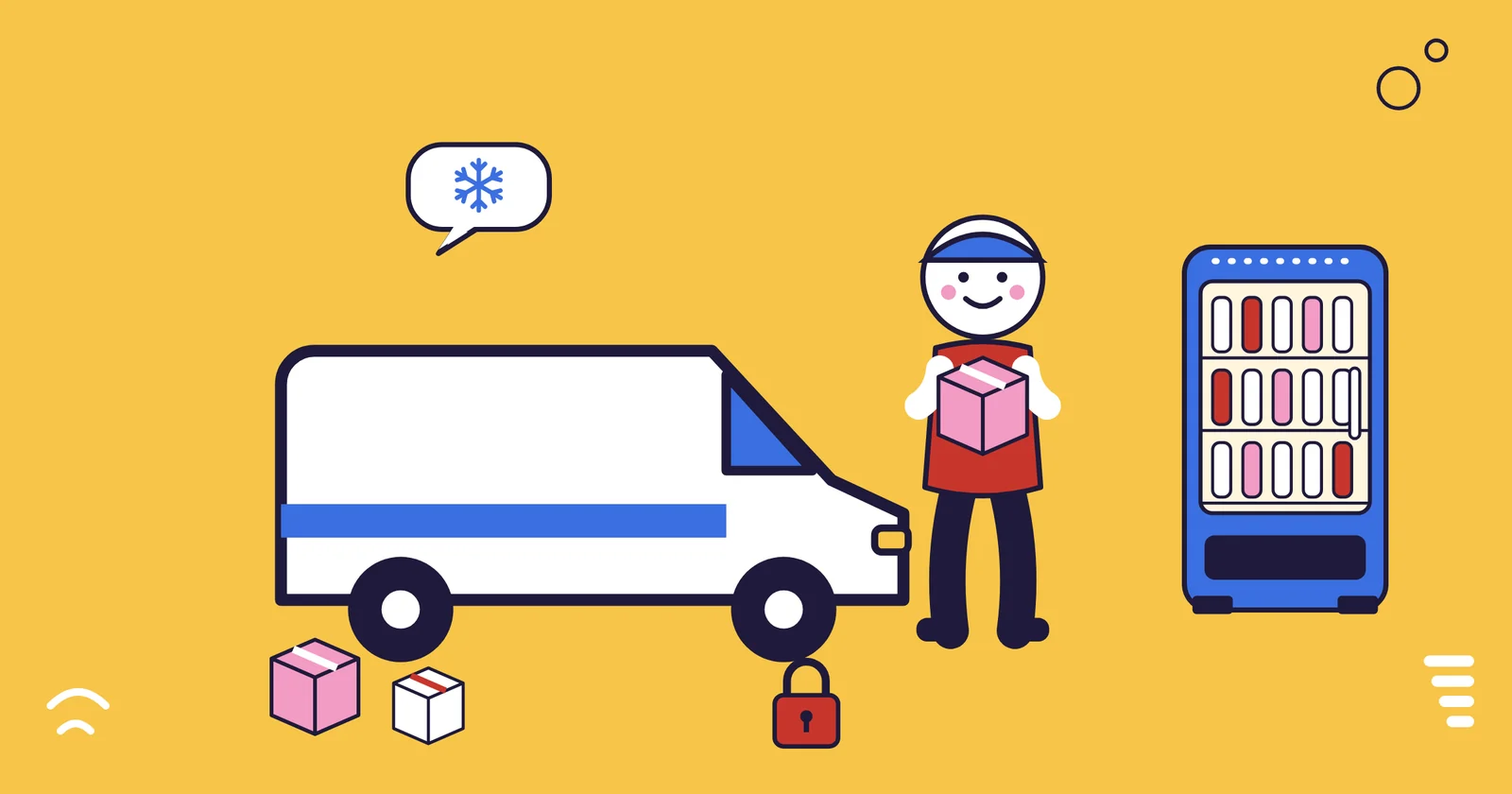
How a vending operator chooses and equips a delivery van for restocking: payload, fit-out, chilled products, powertrain, and load and cash security.
For a vending operator, a delivery van is a work tool, not just a way to get around. It decides how much stock you can take on a route, what condition it arrives in and how smoothly restocking goes. This article helps you choose and equip a vehicle for vending work. It does not cover driver's license rules, weight limits or tax treatment – check those separately with the right sources.
What role the vehicle plays in an operator's work
On a typical day the van links the warehouse to the machines. The driver loads stock, follows the route, restocks machines and collects returns; at some operators the driver also collects cash – others sell cashlessly only and have no cash to collect. At the end of the day the driver comes back with whatever did not sell or needs to be withdrawn. A well-chosen delivery van shortens loading and unloading, protects packaging from damage and keeps order between stops.
The vehicle should fit the scale of the route, not the other way around. A few nearby machines may need only a modest cargo space; longer routes with more sites call for capacity, easy access to stock and stable load securing. We describe the day on the road in our article on a day in the life of a route driver, and how visit order is set in our article on planning restocking routes.
Payload, space and fit-out
When choosing a van, look at three things together: how much stock you regularly carry, how it is packed and how often you need to reach it during the day.
- Cargo space – should hold a full route load with a small spare, without stacking cartons in the aisle or on the passenger seat.
- Racks and shelves – make it easier to split products by site or category and cut searching time on site.
- Load securing – straps, rails and thresholds keep cargo from shifting under braking and on turns.
- Access – side or rear doors that open in a tight parking spot by a building often matter more than raw capacity alone.
Set up the fit-out so the most-needed products are within easy reach and heavier packs sit low and near the axle. That reduces strain on the driver and damage to stock.
Chilled products on the road – what to watch
Some of the range needs to stay chilled between the warehouse and the machine. In the van that usually means a separate zone or portable cooling solutions matched to route length and product type. Exact temperature requirements come from the product and the manufacturer's instructions – this article does not set them.
In practice, it helps to:
- keep chilled products apart from dry ones so the zones do not mix,
- shorten the time chilled packs sit open outside their zone,
- order visits so sensitive products travel for as little time as possible,
- check packaging at loading and at every stop.
Combustion or electric – what to weigh up
The choice of powertrain depends on your routes, not on one universal answer. Short urban loops with frequent stops put a premium on easy maneuvering and day-to-day running costs. Longer trips between towns make range, refueling or charging time and access to stations along the way more important.
When you compare options, line up:
- the length and character of a typical route,
- whether you can charge or refuel during the day,
- payload and fit-out, because the powertrain is often tied to vehicle weight,
- service coverage in the region you drive.
We do not list brands or consumption figures here – check those in current offers and match them to your own routes.
Order, load security and cash
The van carries more than snacks and drinks. It often returns with products to pull and damaged packs; when machines take cash, it also brings back takings. Some operators sell cashlessly only and carry no cash. An orderly cargo area speeds the next stop and cuts mix-ups.
- keep separate spots for outbound stock, returns and damaged packaging,
- secure the load against shifting,
- if you carry cash, keep it in an agreed, locked place and reconcile it with a fixed procedure – more in our article on cash collection from vending machines,
- do not leave the van open and unattended at a machine.
Every vending machine operator across Poland can match vehicle size and equipment to the number of sites and the length of the routes.
FAQ
Is one delivery van enough at the start? For a small network it often is, as long as the cargo space holds a full load for the longest day. As routes grow, the question becomes a second vehicle or a different fit-out.
Do I need a separate van for chilled products? Not always. Some operators carve out a zone in the same van. The call depends on the product mix, route length and how long products spend on the road.
Where should I start when choosing a van? By writing down a typical route: how many sites, what volume of stock, how many returns and whether you carry cash. Only then pick space, fit-out and powertrain.
This article is general and for information only. It does not describe driver's license rules, vehicle weight limits, cold-chain requirements or tax rules. Check current requirements and consult an appropriate advisor on those points.