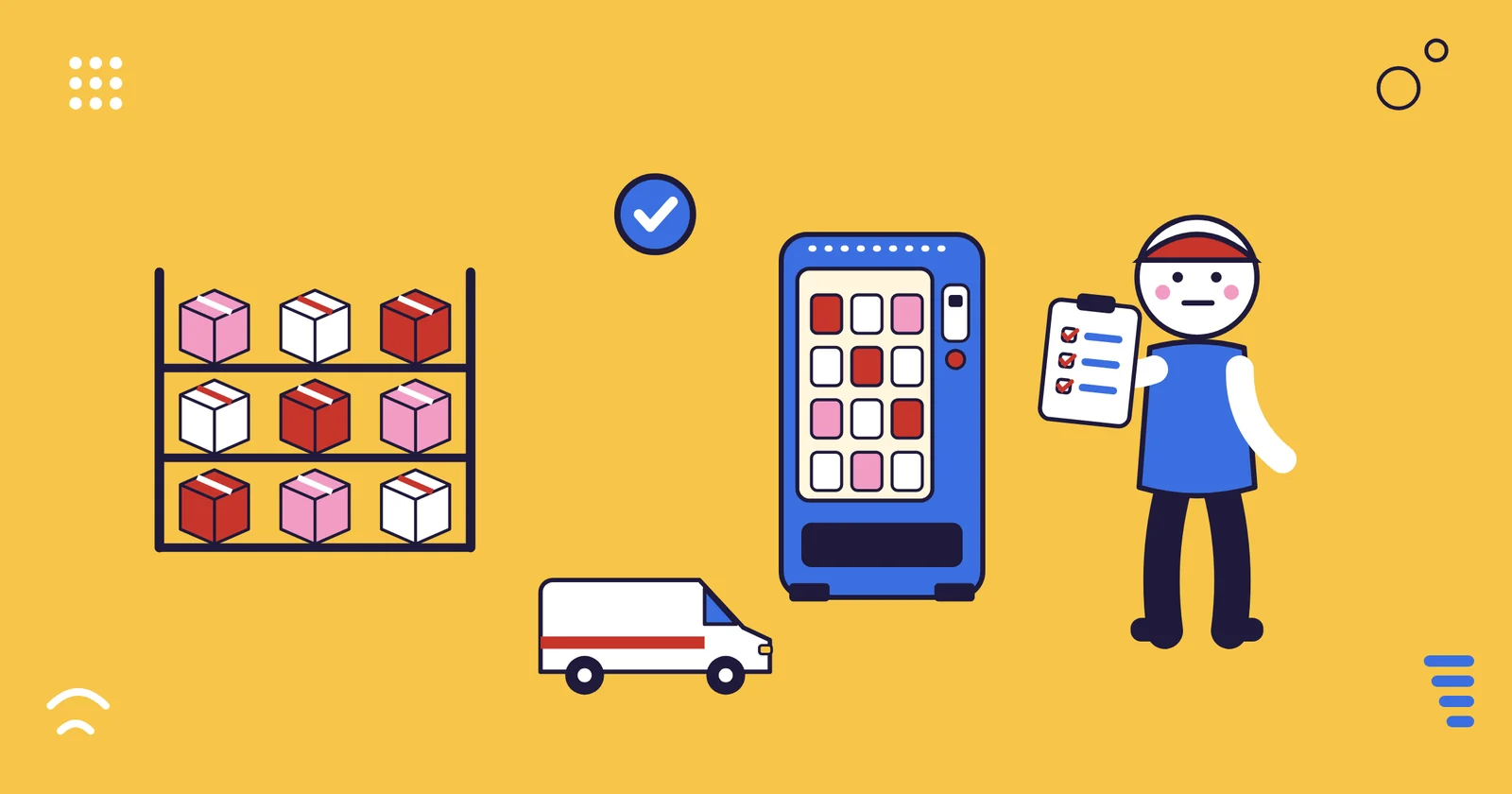
How a vending operator counts stock in the warehouse, in vans and in machines, how to handle discrepancies and who is responsible for what.
For a vending operator, stocktaking is more than a periodic chore. It is how you check whether your systems and paperwork match what is actually on the shelves, in the vans and in the machines' spirals. This article covers the counting process from an operational point of view. It does not cover accounting or tax rules, which are worth settling with your accountant.
Why an operator needs stocktaking
An operator's stock is always on the move: it arrives at the warehouse, goes into a van and ends up in a machine. Discrepancies can creep in at every stage, from a picking mistake or a damaged package to an expired product or a simple data-entry error. Regular counts help you:
- catch discrepancies before they pile up,
- plan orders better,
- have reliable data for judging sales and losses,
- spot sooner which products are nearing their best-before dates.
Three places stock lives: warehouse, van and machine
Warehouse
This is usually the biggest stockpile. Counting goes faster when every product has a fixed spot and the shelves are labeled. We explain how to set up that space in our article on the vending operator's warehouse.
Van
Stock in a vehicle is easy to overlook, and there can be plenty of it, especially at the start of a route. A good habit is to count each van after it returns from a route or before loading, when there is the least stock to check.
Machine
Every machine is a small warehouse. You can record its stock during a regular restocking visit by comparing the number of items in each spiral or column with the previous visit's record and the sales data. If the machine has telemetry, some of that data is already available remotely, but a physical check still helps catch mismatches.
How to count and how often
There is no single frequency that suits every operator. It depends on the size of the network, the number of products and how often discrepancies show up. Many businesses combine two approaches:
- full counts: the whole warehouse, every van and every machine on a set date,
- cycle counts: selected products or locations checked on an ongoing basis, such as the fastest sellers or items that had discrepancies before.
A few rules make the job easier:
- stop moving stock in and out of the area being counted,
- work from one up-to-date product list with codes,
- for large stockpiles, count in pairs or do a second check count,
- write results down right away, not from memory afterward.
It helps to schedule counts around your restocking route planning so that service at your locations is not disrupted.
Discrepancies, losses and expiration dates
After the count, compare the result with the stock level in your system. A discrepancy does not always mean a loss. Sometimes it is a receiving error or a product put in the wrong place. Check the paperwork first, and only then treat the difference as shrinkage.
Stocktaking is also a good moment to review best-before dates. Products with a short shelf life can be moved to routes where they sell faster, while expired products have to be taken off sale. Recurring discrepancies with the same products or in the same places are a sign that the process needs a closer look. Key metrics for vending operators, such as shrinkage and stock turnover, can help here.
Who is responsible for what
Counting works better when roles are clearly split. In a small business, one or two people may do everything. In a larger one, the tasks are usually divided like this:
- the person in charge of the warehouse counts warehouse stock and keeps storage areas in order,
- drivers or merchandisers record the stock in vans and machines on their routes,
- the person who manages the data compares results with the system and looks into discrepancies,
- the owner or manager signs off on the result and decides on process changes.
Whether you are a large vending machine operator across Poland or a small business with a few machines, you can adapt this split to your own scale.
FAQ
Do I have to count the stock in every machine? For a full count, usually yes, because each machine is one of the places where stock is held. For cycle counts, you can pick machines as needed.
Does telemetry replace counting? It makes counting easier by showing sales and stock levels in real time, but it does not catch everything, such as damaged packaging or wrongly loaded spirals.
What should I do with a discrepancy I can't explain? Record it, check whether it happens again and agree with your accountant on how to reflect it in your records.
This article is general and for information only. It does not describe accounting rules or tax regulations for stocktaking. For those, consult an accountant.