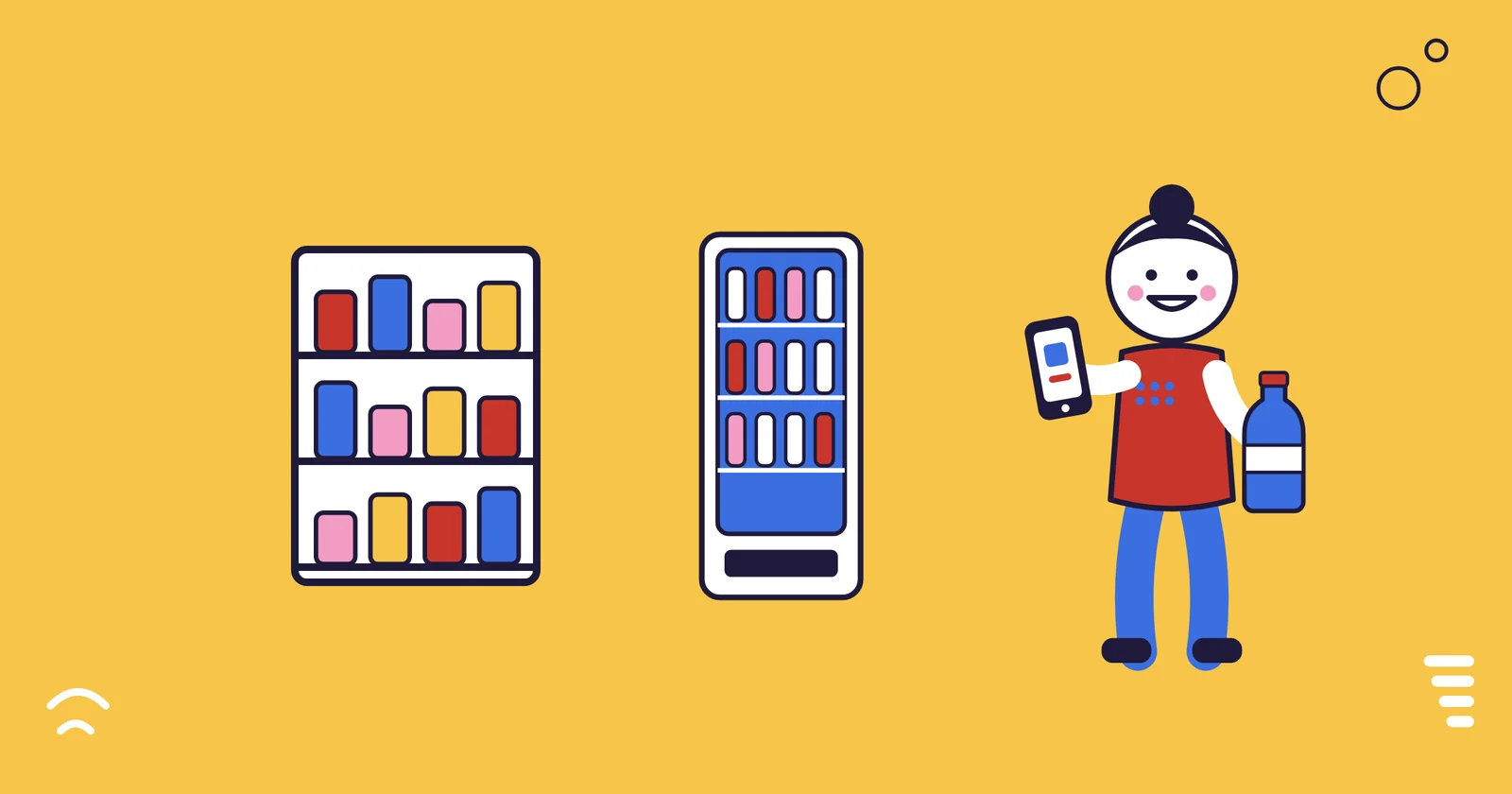
A self-service point with shelves and a kiosk at work, seen from the business side: who runs it, what the host expects, and how duties are split.
More and more companies are asking whether a few shelves, a fridge, and a self-checkout kiosk would work better than a vending machine. This kind of point, known as a micro market, is not just different equipment but also a different arrangement between the operator and the host. This post looks at the model from the business side: who runs the point, what the company providing the space needs, and how the duties are split. We do not quote market data, prices, or legal requirements.
What a micro market is
A micro market is a self-service point of sale with open shelves, fridges, and a payment kiosk. It usually sits in a closed office or plant that only employees can enter. The difference from a vending machine is simple. In a vending machine, the product sits behind glass and drops after payment. In a micro market, the customer picks up the product, looks at it, reads the label, and only then pays. It is closer to a small store than to a vending machine, but without a cashier. The format developed abroad and appears in Poland mainly in companies with access control. That does not mean it suits every office. It needs specific conditions, which we cover below.
Trust is a requirement
A micro market runs on trust. Products sit on open shelves, and nobody stands at the checkout. That is why the format works mainly where only the company's employees use the point. In a place open to everyone, the risk of people taking products without paying is usually higher. Many systems use video monitoring and access by employee badge. If you are considering cameras, agree on their use with the building manager and the person responsible for data protection at your company. We do not state any rules here, because they depend on the site and the company. What matters is that employees know how the point works and what is expected of them. Clear information at the entrance does more than a camera in the corner.
Who a micro market suits
A micro market suits offices and plants where access to the building is controlled and there is room inside for a few shelves and a fridge. It usually works where many people work and there is no cafeteria or store nearby. Employees can then buy something to eat without leaving the building. At companies that run shifts, a micro market can also serve the night shift, when everything else is closed. It makes less sense in a very small office. A handful of people will not get through a wide selection, and products in the fridge will expire. There, a vending machine or a well-stocked kitchen cupboard is usually enough.
Space and power
A micro market needs more space than a vending machine. You need a few shelves, fridges, a kiosk, and room for people to stand and browse comfortably. It works best in a separate room or a dedicated part of the kitchen. The fridges and the kiosk need power. The equipment manufacturer lists how many outlets and what load are needed on the rating plate and in the documentation. An electrician should assess the building's wiring. The kiosk also needs an internet connection, so ask the operator what kind of connection the system requires. Do not place fridges next to a radiator or in full sun. The equipment manual lists the conditions it should run in.
Who runs the point
In the typical model, an operator runs the micro market. They supply the shelves, fridges, and kiosk, stock the shelves, watch the dates, and handle the sales settlement. The company provides the space and usually the power. The agreement sets out the exact split of duties and how settlement works. Read it carefully and ask about anything missing. Who cleans the area around the point? What happens when the kiosk stops working? How fast does the operator respond to a report? If the agreement is unclear, show it to a lawyer. Discuss settlement and tax questions with your accountant. We do not give any rates or rules here, because they depend on the agreement and the company's situation.
A selection that fits the team
A wide selection is an advantage only when it suits the people. Ask the team what they miss during the day. It might be breakfast, a filling lunch, fruit, or healthier snacks. The operator usually starts with a basic set and then adjusts it based on sales. Data from the kiosk shows what sells and what sits until its date runs out. That lets the selection change faster than in a vending machine. It is worth reviewing this data with the operator from time to time. Products nobody buys take up shelf space that half the team's favorite yogurt could use.
Fresh products and dates
Micro market fridges often hold sandwiches, salads, and ready meals. For a team without a cafeteria, that is a big plus. Fresh products have short shelf lives, though, and need proper storage. The producer lists the storage conditions on the label. Watching dates and removing expired products is usually the operator's job. The operator knows which hygiene requirements apply to such a point, and if in doubt, ask an advisor or the relevant authority. We do not state any regulations here. The company's part is usually reporting problems: a fridge that is not cooling, or a product that looks off. A clear operator contact at the kiosk makes that much easier.
Guests, couriers, and contractors
Many offices host more than employees. Guests come for meetings, and couriers, service crews, and cleaning staff pass through. Think about whether they should use the micro market. If so, they need clear information on how to pay. If not, the point should stand where they do not have free access. This matters for the trust the whole format depends on. Some companies solve it with a vending machine for guests in the lobby and a micro market in the employee area. Before you decide, walk around the office and see who goes where during the day.
The first few weeks
Launching a micro market is a learning period for everyone. Employees need to get used to scanning products, and the operator needs to learn the company's rhythm. Prepare a short note at the kiosk: how to pay, what to do when something does not work, and where to report a problem. It also helps to name one person at the company who collects feedback and passes it to the operator. After a few weeks, sit down with the operator and review sales, gaps, and reports. Small issues usually come up then, such as the wrong restocking time or a product that is always missing. A quick fix early on saves frustration in the months that follow.
What to check before you decide
Before you choose a micro market, go through a short list.
- Who has access to the spot where the point would stand?
- Is there room for shelves, fridges, and a kiosk?
- Are the wiring and internet connection sufficient? Ask an electrician and the operator.
- How many people will use the point, and at what times?
- What does the team miss during the day?
- Who is responsible for restocking, dates, and cleaning?
- What does the agreement say about settlement, breakdowns, and response times?
The answers will show whether a micro market makes sense or whether a vending machine is the better fit.
A format that needs the right fit
A micro market is a convenient option for companies with many employees, controlled access, and room for a few shelves. It offers more choice, shorter lines, and easy access to labels. It also needs trust, space, and a well-organized relationship with the operator. Where those conditions are missing, a vending machine is still the simpler choice. The line from the start of this post could disappear thanks to a micro market. It could also disappear thanks to a second vending machine elsewhere in the building. The best solution is the one that fits your office, not the latest trend.
Related reading: The Operator Model in Vending and Round-the-Clock Sales.
FAQ
Will a micro market replace vending machines? Not always. In public areas, a vending machine is usually safer, because the products are locked in.
Do micro markets carry fresh food? Often, in fridges. The producer lists the storage conditions on the label.
Who restocks a micro market? Usually the operator. The agreement sets out how duties are split.
Does a small office need a micro market? Usually not. With only a few people, products could expire, so a vending machine or a kitchen cupboard is often simpler.