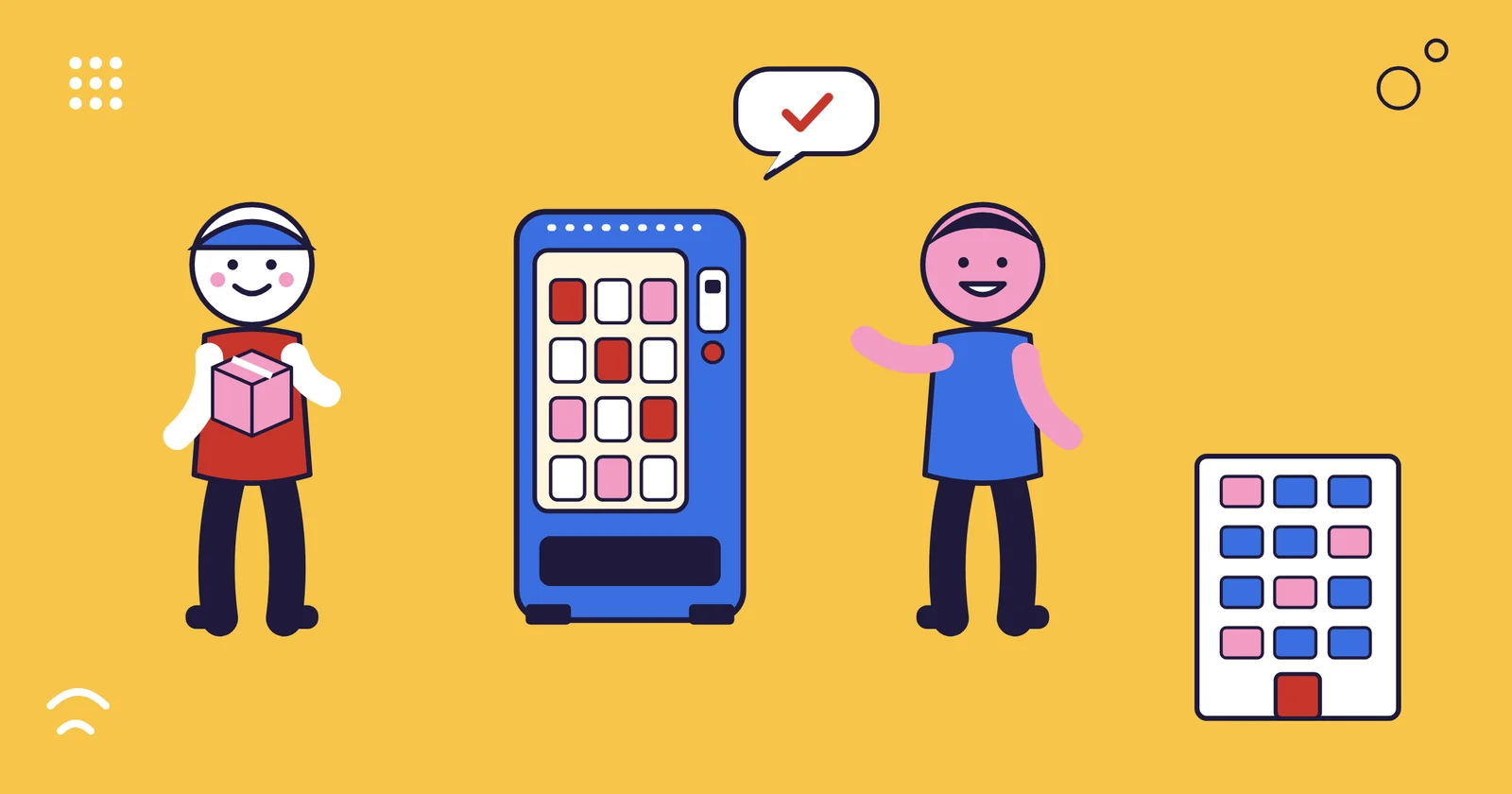
In the operator model, the site owner provides space and the operator handles everything else.
- What the operator model means
- Who does what
- How the two sides settle
- Why traffic matters so much
- Who pays for power
- Choosing the spot
- Does the site influence the menu
- Access and restocking hours
- Service and breakdowns
- When the machine does not sell
- Responsibility and insurance
- How long the agreement lasts
- What to check before you sign
- A partnership, not a purchase
- FAQ
A facility manager gets an email from a vending operator. They would like to place a machine in the lobby. The manager has two questions right away. What do we have to do? And what does it cost us? Most of the answer lies in the operator model, the most common way machines end up in offices, factories, and schools. This post explains how that model works: who does what, how the two sides settle, and what to check before you sign. It does not give you rates or a sample contract. Those depend on your site and on the agreement you negotiate.
What the operator model means
In the operator model, the operator supplies, stocks, services, and settles the machine. The site owner provides the spot and usually power. The machine belongs to the operator, not to the site. So does the stock inside it. The operator decides how often to visit, buys the products, takes care of breakdowns, and collects the money from sales. The site does not run a small shop. It hosts one. That is why the model appeals to managers who want a machine but do not want another job. It is not the only model. Some companies buy or lease machines and run them themselves. But the operator model is the one most sites meet first.
Who does what
The division of roles is simple on paper:
- Operator: the machine, the stock, the service.
- Site: the space and the power.
- Both: the terms in the agreement.
In practice, the details matter. The operator usually handles delivery, installation, restocking, cleaning the machine inside, removing expired products, and repairs. The site usually provides a suitable spot, access at agreed hours, and a power socket. Small tasks fall in between. Who empties the trash can next to the machine? Who tells the operator when something is broken? Who keeps the area tidy? Write these down in the agreement, too. Gaps in the details cause more friction than big disagreements.
How the two sides settle
Settlement between the operator and the site can take several forms. It may be rent for the space, a commission on sales, or no fee at all. Which one applies depends on the traffic at the site and on what the two sides agree. We do not give rates or percentages, because they vary from site to site and from operator to operator. A busy location with many users may have more room to negotiate than a quiet one. A small site may be glad just to have a machine. Whatever you agree, it belongs in the agreement, in plain words. If the terms are unclear, ask a lawyer before you sign. How settlements are booked is a question for your accountant.
Why traffic matters so much
For the operator, a machine is a small business that has to pay for itself. Every visit costs time and fuel. Every product that expires is a loss. So the operator looks closely at how many people will use the machine and how often. More users usually mean more sales. That affects the terms the operator can offer. When an operator asks how many people work at your site, it is not small talk. Give an honest answer. Overstating the traffic may get you better terms at first, but the machine will not sell as expected. Then the operator may change the terms or remove the machine. Accurate numbers make a stable arrangement.
Who pays for power
A machine uses electricity, especially if it cools food or heats water. The agreement decides who pays for it. Sometimes it is the site, sometimes the operator. The machine's power requirements are on its rating plate and in the manufacturer's documentation. Ask the operator for these before the machine arrives. An electrician can tell you whether your socket and circuit can handle it. Do not plug a refrigerated machine into an overloaded power strip. If you need a new socket, agree in advance who arranges and pays for it. These questions sound small, but they come up quickly when the first electricity bill arrives.
Choosing the spot
The site provides the space, but choosing the right spot is a shared task. The operator knows what sells where. The site knows how people move through the building. A good spot is where people pass naturally, but where a machine does not block a door, a corridor, or an escape route. The person responsible for the building can confirm whether a spot is acceptable. Think about light, about the floor, and about whether the machine will stand in direct sun. You can read about typical places in the page on machine locations (publisher's site). Visit the spot together with the operator before you agree.
Does the site influence the menu
Usually, yes. The operator considers the site's needs when choosing products. A factory with night shifts needs different things from a gym or a school. Tell the operator who uses the space and when. Mention any special requests, such as more water, fresh food, or products without gluten. The operator will tell you what is possible on their route. The final selection is still the operator's decision, because they buy and stock the products. If certain products should not be sold at your site, say so clearly and put it in the agreement. Then review the menu together after a few weeks, once you know what actually sells.
Access and restocking hours
The operator needs access to the machine to restock and service it. Agree on when that can happen. Some sites allow visits only during working hours. Others have a reception desk that lets the operator in at any time. If the machine stands in a secured area, decide how the operator gets in and who escorts them, if needed. The route planner will fit your site into a schedule, so clear access hours help. Also agree how the operator should report a visit if something looks wrong, such as a damaged machine or a spill. Clear rules on access save phone calls and missed visits later.
Service and breakdowns
Any machine can break down. In the operator model, repairs are the operator's job. What matters for the site is how fast someone notices and how fast the repair happens. Many operators use telemetry, which reports errors and empty slots remotely. That helps, but people at the site still need to know how to report a problem. Ask the operator for a contact and put it on or near the machine. Ask what response times they aim for and where that is written. Refunds for people who lost money are handled according to the operator's procedures. Make sure users know where to find that information.
When the machine does not sell
Sometimes a machine sells less than expected. That is not a disaster, but it needs attention. Start with the simple causes. Is the machine in a spot people actually pass? Does the menu match what they want? Do they know which payments it accepts? The operator sees the sales data and can often suggest a fix, such as moving the machine or changing the products. Give the change a few weeks. If sales stay low, the operator may propose different terms or a different machine. Check what the agreement says about that situation, so neither side is surprised.
Responsibility and insurance
A machine standing in your building raises questions about responsibility. What happens if it is damaged? What if someone is hurt? What if the machine causes damage to the floor or the wall? These questions belong in the agreement. The agreement should say who is responsible for what and whether insurance is required. We do not describe any legal rules here, because they depend on the agreement and the circumstances. Ask a lawyer to read the relevant parts. Ask your insurance advisor whether your current policy covers equipment owned by someone else. It is better to settle this before anything happens.
How long the agreement lasts
Agreements are signed for a certain period, or indefinitely with a notice period. Check how long yours lasts and how either side can end it. Check what happens to the machine when the agreement ends, who removes it, and in what condition the spot should be left. Some agreements include a trial period. That gives both sides time to see whether the machine sells and whether cooperation works. Note any terms that change automatically, such as a renewal. Put the end date in your calendar. Ask a lawyer about anything you do not understand. Agreements are easier to read before signing than after a dispute.
What to check before you sign
Before you sign an operator agreement, run through a short list:
- Who provides what: machine, stock, service, space, power.
- How settlement works and whether there is a fee, in plain words.
- Who pays for electricity and any new socket.
- Access hours and how the operator gets in.
- How faults are reported and how refunds work.
- Responsibility for damage and any insurance requirements.
- How long the agreement lasts and how it ends.
If any point is missing or unclear, ask for it to be added. A lawyer can review the final text.
A partnership, not a purchase
The operator model works best when both sides treat it as cooperation. The operator wants a machine that sells. The site wants a machine that people like and that does not cause problems. Those goals fit together. Share feedback with the operator: what people ask for, what they complain about, and when the machine is busiest. Expect the operator to listen and adjust. Meet or talk every few months, at least at the start. A machine that nobody thinks about is often a machine that works well. And if the facility manager from the start finally knows what to do and what it costs, the email was worth answering.
Related reading: Self-Service Shelf Points at Work and Vending Machines vs. Stores.
FAQ
Who pays for power? The agreement decides. Sometimes the site, sometimes the operator.
Does the site influence the range? Usually. The operator considers the site's needs.
Does the site own the machine? No. In the operator model, the machine and the stock belong to the operator.
How is the settlement between the sides set? In the agreement. It may be rent, a commission, or no fee, depending on traffic and what the sides agree.