Comparing vending machines and traditional stores as sales channels: availability, selection, staffing, and space.
- Complements, not rivals
- Round-the-clock availability
- Wide or narrow selection
- Space and premises
- Service and staff
- Speed of purchase
- Payments
- Freshness and product type
- Customer experience
- Costs from the customer's side
- Stock and restocking
- Breakdowns and their effects
- Where a machine has the edge
- Where a store has the edge
- Together in one building
- What to check before you decide
- Two channels, two roles
- FAQ
A warehouse worker has a fifteen-minute break. The nearest store is a ten-minute walk each way. In theory there is time. In practice the worker comes back out of breath, with a sandwich eaten on the run. A machine by the locker room solves this in a minute, but it will not sell bread for dinner or laundry detergent. This post shows how a vending machine and a store differ as sales channels. It covers availability, product range, space, staffing, and the customer experience. We do not declare a winner or cite market data. We show when each channel makes more sense.
Complements, not rivals
People often ask whether vending machines are beating stores. The question is a little misleading. A machine and a store usually complement each other rather than fight over the same customer at the same moment. A machine provides quick access to a narrow selection at any hour in a small space. A store offers wide choice, staff, and the chance to do a bigger shop. The right channel depends on the location and customer needs. In an office building with a café on the ground floor, a machine upstairs can still make sense. At a station with a store open late, a machine helps after closing. Each has its role.
Round-the-clock availability
The biggest difference is hours. A machine can run around the clock without staff. A store has opening hours, even if they are long. That difference matters where people are present at night, on weekends, or on holidays. A shift-work plant, a hospital, a dorm, a station. In places like these, a machine is sometimes the only option at three in the morning. In an office open from eight to five, the advantage is smaller, but time still counts. The machine is a few steps from your desk, and the store is a few minutes away. We cover this in more detail in the post on round-the-clock sales.
Wide or narrow selection
A machine holds a limited number of products. A store, even a small one, offers hundreds or thousands. That is a fundamental difference, and there is no way around it. A machine has to be matched carefully to its location. Every spiral is a decision: what do people here actually buy? In an office it might be coffee, water, and snacks. In a gym, drinks and protein bars. At a station, something quick for the road. A store can afford products that sell rarely, because it has space. A machine cannot. That is why the operator keeps an eye on sales and swaps out what does not sell for something customers are looking for.
Space and premises
A machine takes a few square meters, sometimes less. It needs an outlet, a stable floor, and a spot where it does not block a walkway. A store needs premises, a back room, storage, and often a street-facing window. That means a machine can stand where a store would never fit. A corridor in a production hall, a hospital lobby, a break room in an office building. On the other hand, a machine depends on the property owner's permission. The terms for placing the device go into an agreement with the facility manager. A store has its own premises and more freedom. A machine is a guest in someone else's building and has to behave well.
Service and staff
A store needs people: cashiers, people to stock shelves, a manager. A machine works without staff on site. That does not mean nobody looks after it. Someone has to restock it, clean it, settle the accounts, and fix it. That work happens in short visits, though, not all day long. Having no staff has a cost. A customer cannot ask a salesperson about ingredients or get advice. They also cannot get help when something goes wrong. That is why a machine has to be easy to understand, with a clearly visible contact number. In a store, problems get solved at the register. At a machine, over the phone.
Speed of purchase
Buying from a machine usually takes very little time. You walk up, choose, pay, and collect. There is no checkout line unless several people show up at once. In a store, even a quick purchase means walking in, finding the product, and paying. At peak hours that can take a while. For someone with a short break, the difference can be decisive. A machine wins where every minute counts. A store wins when the customer has time and wants to compare several products. Nobody picks wine for a family dinner from a machine in a hallway. And nobody walks to a supermarket for one bottle of water when it is three steps from their desk.
Payments
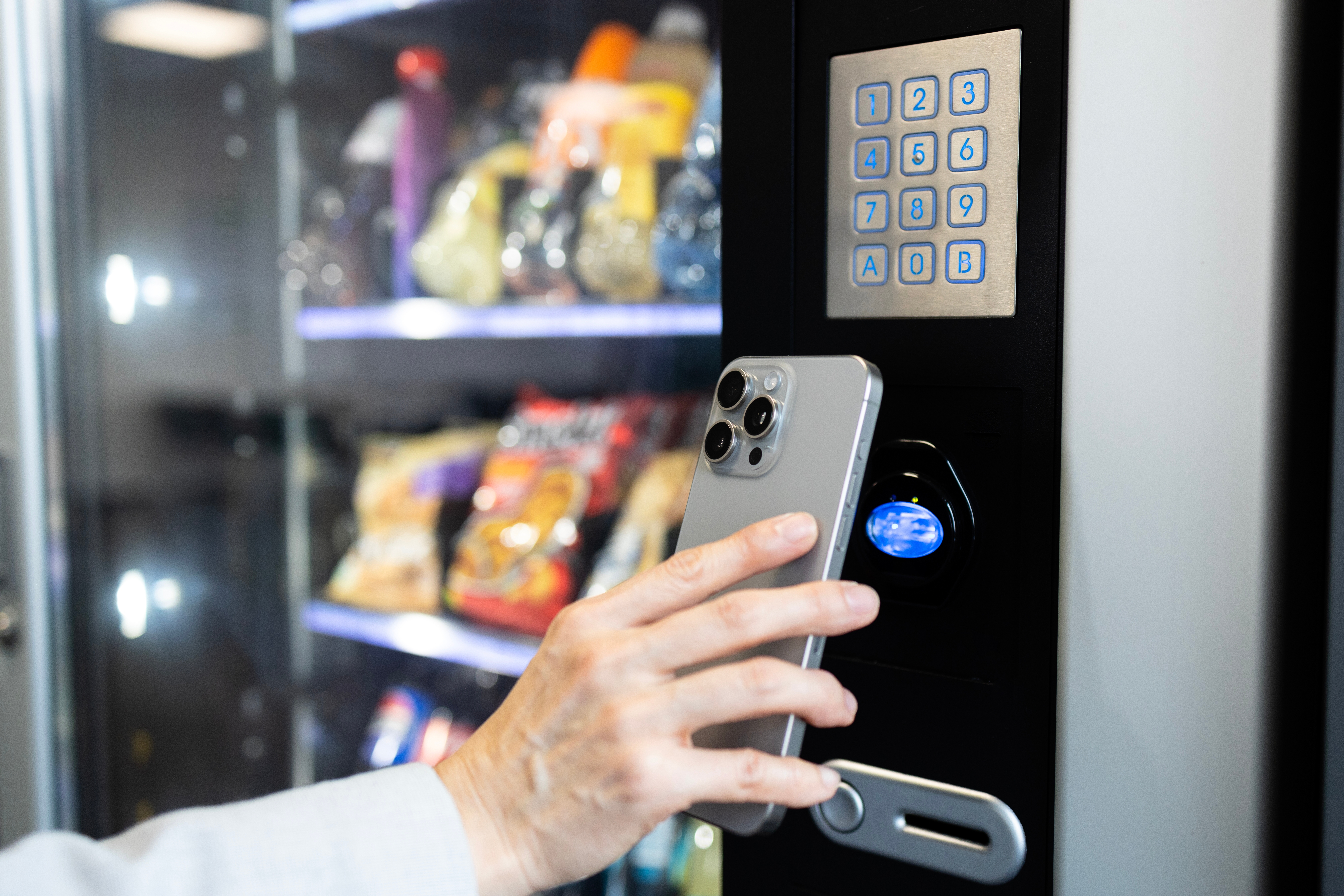
In a store you can pay with cash, a card, a phone, sometimes a voucher. At a machine, the options depend on the device. Older machines take only coins. Newer ones have card readers and accept phone payments. More and more people carry no cash, so a machine without cashless payments loses customers. On the other hand, cash is still needed in some places. It is best when the machine offers a choice. The payment provider describes what a given reader can do. In a store, a cashier can sort out a payment problem. At a machine, the reader's reliability is what counts, because nobody will help when the terminal cannot connect.
Freshness and product type
A store can sell bread, fruit, vegetables, and products by weight. A machine has limits here. Most machines sell packaged products, drinks, and coffee. There are refrigerated machines with sandwiches and meals, but they need more frequent visits and close attention to dates. The producer lists storage conditions on the label. A machine works well for products customers want quickly and in a familiar form. A store wins for purchases that call for looking, touching, or picking a specific item. Nobody picks tomatoes through the glass of a vending machine. But a candy bar in a familiar wrapper does not need inspecting from every angle.
Customer experience
In a store, customers see shelves, compare prices, and read labels. They can ask about something new or ask for help. At a machine, the experience is simpler and shorter. They see products through the glass or on a screen, choose, and pay. For many people that is a plus. No need to talk to anyone or stand in line. For others it is a minus, because there is no human contact and no chance to look at a product up close. A machine can gain a lot from clarity, though. Well-labeled products, clear prices, and ingredient information help. The producer provides allergen information, and customers should be able to find it without guessing.
Costs from the customer's side
Customers compare more than the price of the product. They also compare time and effort. Going to a store means leaving your workstation, putting on a jacket, and walking both ways. Buying from a machine takes a minute. For someone with a short break, that matters. We do not quote prices here, because they depend on the location, the product, and the operator. It is worth remembering, though, that customers decide for themselves whether the convenience is worth any difference. If a machine at a site sits full while people walk to the store, that is a sign something is off. Maybe the product mix, maybe the prices, or maybe the store is simply closer than it seemed.
Stock and restocking
A store has a back room and storage. When something runs out on the shelf, someone brings another box. A machine has only what fit into its spirals. When a product runs out, the spiral stays empty until the operator's next visit. That is why restocking plans matter much more for a machine than for a store. The operator has to know what sells fast and what sells slowly, and come back before the most popular products run out. Telemetry, meaning remote visibility into the machine's status, helps with this if the device has it. A store reacts to gaps within minutes. A machine within hours or days, depending on the route.
Breakdowns and their effects
In a store, a broken fridge is a problem, but the store keeps operating. The cashier moves the products elsewhere, and customers buy the rest. At a machine, a breakdown often stops all sales. A jammed coin, a dead reader, or a cooling problem, and the customer walks away with nothing. That is why fast service response and clear refund rules matter for a machine. The contact number should be easy to see. The operator fixes simple faults using the manufacturer's manual, and more serious ones need a service technician. A customer who lost money and does not know how to get it back quickly returns to the store, even if it is farther away.
Where a machine has the edge
A machine wins where a store is far away, closed, or missing altogether. In offices, where staff do not want to leave the building. In production halls and warehouses, where breaks are short. At stations and in hospitals, where people wait at all hours. In schools, dorms, and sports facilities. In all these places, proximity and speed matter, and a narrow selection is no obstacle, because customers are looking for a few specific things anyway. The machine then answers a simple need: I want something now, here, and without hassle. In places like these, a store simply cannot reach.
Where a store has the edge
A store wins when customers do a bigger shop, need fresh products, or want to compare options. It also wins where contact with a salesperson and the chance to ask a question matter. A neighborhood store, a supermarket, a bakery, or a drugstore offers something a machine cannot: choice and service. In a place where a store is open long hours and sits right next door, a machine may have little to offer. It is worth assessing that honestly before placing a device. Not every location needs a machine. Sometimes the best advice for a building manager is that the store across the street is enough.
Together in one building
In many places, a machine and a store work side by side. An office building has a store on the ground floor and machines upstairs. A station has a kiosk open until evening and a machine that takes over at night. A hospital has a cafeteria open during the day and machines on the wards. That setup serves people well at different times and in different situations. What matters is that they do not duplicate each other. A machine next to a store with an identical product range rarely makes sense. A machine that offers what the store lacks, or what people need after it closes, works much better. A good complement starts with looking at what is already available.
What to check before you decide
If you are wondering whether to place a machine at a given site, go through a few questions.
- Where is the nearest store, and what are its hours?
- When are people in the building, and how long are their breaks?
- Are they looking for a few specific products or a wide choice?
- Is there a spot with an outlet that does not block a walkway?
- Can the machine accept cashless payments?
- Who will restock it and take reports of problems?
The answers will show whether a machine adds to what is already there or just repeats it.
Two channels, two roles
A vending machine and a store do not have to compete. Each answers a different need. A machine gives quick access to a few products, close by and at any hour. A store gives choice, service, and fresh products. They work best where they complement each other. And the warehouse worker with a fifteen-minute break can grab water by the locker room and shop for dinner after work. No running and no losing breath.
FAQ
Will vending replace stores? No, it tends to fill gaps where a store is absent or closed.
Where does vending win? In offices, plants, stations, and at night, wherever proximity and time matter.
Can a machine sell fresh products? Some refrigerated machines can, but they need more frequent visits and attention to the producer's dates.
Does a machine next to a store make sense? Only if it offers something different or works while the store is closed.