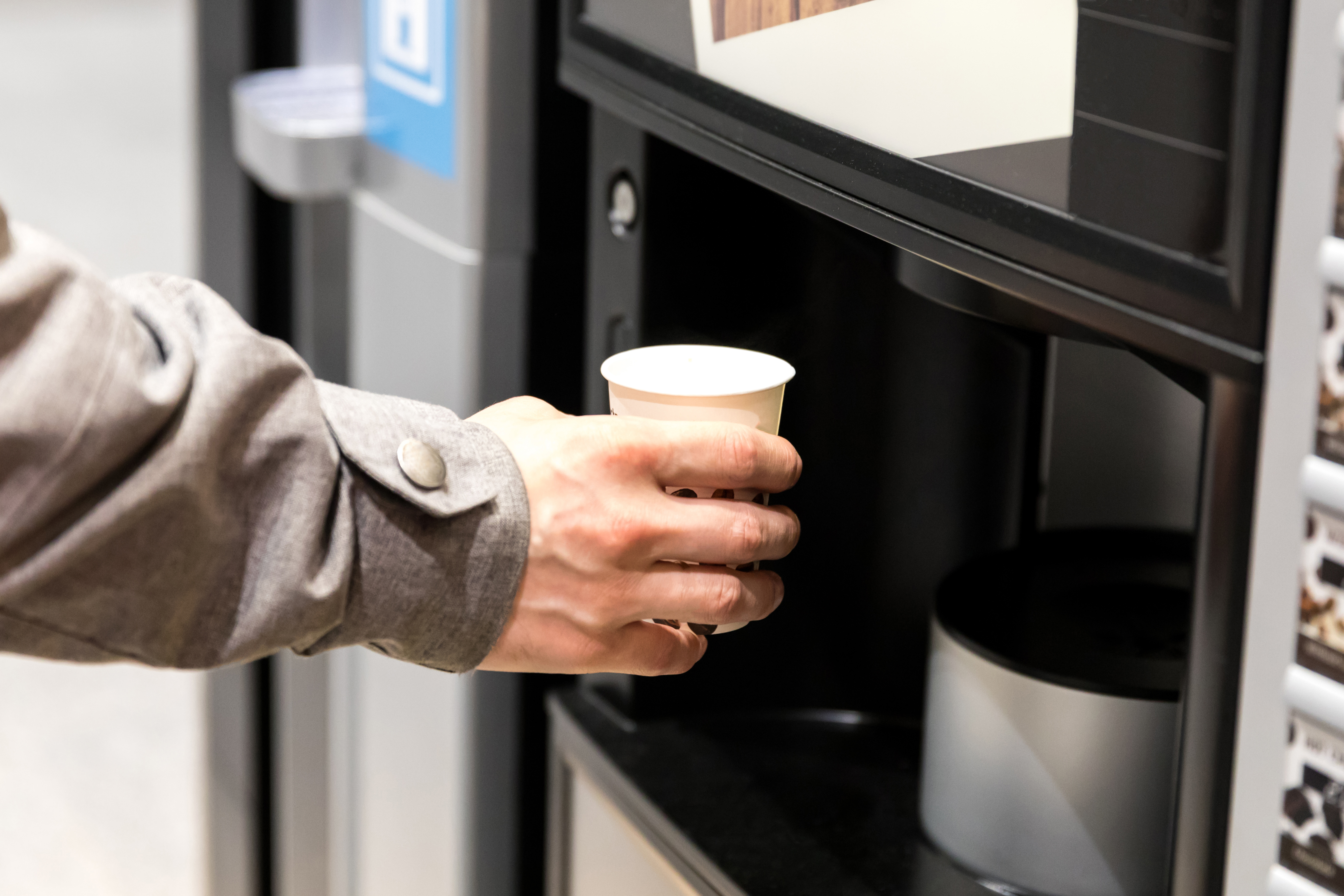
What vending customers expect today: card payments, wider choice, product information, and reliability.
- Buying should be easy from the first second
- No card reader often means no sale
- A selection that fits the site
- Ingredients and allergens
- A machine that simply works
- Clean glass, clean counter
- The hours when a machine is needed
- Less waste, more order
- Different sites, different expectations
- How to learn what your users want
- Talking to the operator
- What not to expect from one machine
- Make changes step by step
- What to check before you make changes
- The customer has the last word
- FAQ
An employee walks up to the vending machine between two meetings. She has her phone in her hand and not a single coin in her pocket. She wants something without sugar and needs to know whether the bar contains nuts. The machine shows only shelf numbers and a sticker that says "coins only." She leaves empty-handed and heads to the store across the street. This post describes what people who use vending machines expect today and what that means for the site that hosts a machine. We do not quote market data or forecasts. We show how to understand your own users and how to talk to the operator about them.
Buying should be easy from the first second
A person at a vending machine usually has little time. They stepped out of the office for a moment, they are waiting for a train, or they have a short break on the shop floor. Every extra step lowers the chance of a sale. If they have to hunt for a product number, count change, and wait for coins to drop, some people will give up. The expectation is simple: walk up, see, choose, pay, collect. It is not about a flashy screen. It is about having nothing in the way. Clearly labeled shelves, readable prices, and plain information on how to pay do more than new lighting. Before you think about a new machine, stand in front of the current one as if you were seeing it for the first time. Notice the moment when buying gets complicated.
No card reader often means no sale
Many people no longer carry cash. They pay with a card, a phone, or a watch, and they expect the machine to allow that too. When there is no reader, the sale simply does not happen. The customer does not report it to anyone. They walk away, and next time they do not even come over. That is why payment information should be visible from a distance, not only next to the coin slot. If your machine takes only cash, ask the operator whether it can be fitted with a reader. Technical details and costs depend on the machine and the agreement, so ask about them directly. It also helps to agree on what happens when a cashless payment fails but the money is taken anyway. The customer should know where to report it.
A selection that fits the site
Interest is growing in sugar-free, vegan, and gluten-free products. That does not mean a machine should sell only health food. It means that one shelf of simpler products can win back people who used to walk past the machine. What matters is the fit with the site. An office needs different products than a university, and a factory running shifts needs something else again. The night shift often wants something filling, not another candy bar. Students before an exam want coffee and something quick. It is best to ask the users themselves instead of guessing. The operator can then test a few products and see what actually sells.
Ingredients and allergens
More and more people read labels. Someone has an allergy, someone else avoids lactose, and someone else counts sugar. At a vending machine it is hard to look at the package before buying, because the product sits behind glass. For a person with an allergy, that is a real problem. So it is worth agreeing with the operator on how a customer can learn what is in a product before paying. Sometimes it is enough to face the package label-side out. Sometimes the machine has a screen with a product description. The source of information about ingredients and allergens is always the producer's label. Do not copy it by hand onto a note taped to the machine. Mistakes happen easily, and the recipe can change with a new delivery. It is better to point people to the original package.
A machine that simply works
An empty or broken machine loses trust fast. Two failed attempts are enough for someone to stop using it for good. People remember the machine that "ate" their money longer than they remember a good cup of coffee. Reliability is one of the most important expectations, even though few people say it out loud. Telemetry helps here. It sends information about stock levels and errors to the operator remotely, so the operator can spot an empty slot or a fault sooner. A clear way to report problems matters just as much. The machine should show the operator's contact details and a short note on how to report an issue. A customer who knows where to write is less likely to walk away feeling cheated.
Clean glass, clean counter
A customer judges a machine in the first few seconds. Dusty glass, a sticky keypad, and spilled coffee on the drip tray tell them more than any sticker. If the unit looks neglected, people assume the products inside might be neglected too. This matters most for coffee machines and units with chilled products. Agree with the operator on who cleans the outside of the machine, who cleans the inside, and how often. The cleaning method is described in the manufacturer's manual. The site usually takes care of the surroundings: a trash can nearby, a clean floor, and good lighting. A machine in a dark corner next to an overflowing bin sells less, even when everything inside is fine.
The hours when a machine is needed
A vending machine has one advantage over a cafeteria or a store. It can work when everything else is closed. You can see this expectation at sites that run shifts, in hospitals, and in dormitories. Someone finishes a late shift and wants to buy water. Someone else waits on a ward all night. If the machine stands in a part of the building that is locked in the afternoon, that advantage disappears. Check who can reach the machine and at what hours. Also consider whether restocking happens right before the rush, when the shelves should be full. The operator sets the restocking rhythm, but can adjust it only if they know when people buy the most.
Less waste, more order
Some people pay attention to what is left after a purchase. A coffee cup, a sandwich wrapper, a water bottle. If there is nowhere to throw it away next to the machine, the waste ends up on a windowsill or on the kitchen table. It is a small thing, but it shapes how people see the whole spot. It is worth placing sorting bins next to the machine, following the rules that apply in the building. Ask the building manager for the details. For a coffee machine, ask the operator whether people can use their own cup. Not every unit allows it, so the answer depends on the model and its settings. If it does, many people will gladly take advantage of it.
Different sites, different expectations
There is no single vending customer. In an office, what counts is quick coffee before a meeting and something sweet after lunch. At a university, price and evening access matter, because the snack bar is closed by then. At a station, people buy on the run and want to pay with one tap. In a hospital, the machine serves visitors who wait for hours and need water or something to eat. On a factory floor, breaks are everything, because that is when the line forms. Each of these places needs a different selection, a different restocking rhythm, and a different machine setup. So study customer expectations at your specific site instead of borrowing them from general opinions about vending.
How to learn what your users want
The simplest source is sales data. The operator usually knows which products sell fast and which sit until their date runs out. Ask for a short summary and go over it together. The second source is the users themselves. A short survey with three or four questions will tell you more than a long form nobody fills in. Ask what is missing, when people use the machine, and what puts them off. The third source is observation. Stand near the machine during the lunch break and watch what happens. Do people wait? Do they look for something that is not there? Do they give up at the payment step? Simple observations like these often reveal a problem the numbers do not show.
Talking to the operator
Customer expectations change nothing on their own. You have to pass them on to the operator in a way that is easy to act on. Instead of a general "people are unhappy," be specific: phone payments are missing, there is nothing sugar-free, the coffee runs out before noon. An operator responds more easily to a concrete problem than to a vague remark. Ask what can change right away and what needs a new machine or a change to the agreement. The product range can often change quickly, while a new reader or an extra machine is a longer conversation. The agreement sets the terms of cooperation. If a change affects settlements, check the agreement before you agree to anything verbally.
What not to expect from one machine
One vending machine will not replace a cafeteria or a store. It will not hold a hundred products, and it will not have fresh meals for every time of day. It is worth saying so openly, including to users. If expectations are much bigger than what one unit can do, consider another solution. It might be a second machine elsewhere in the building, a machine for chilled products, or a micro market in a closed office. Each of these has its own requirements for space, power, and service. The equipment manufacturer provides the technical details, and the operator knows what is possible at your site. Setting clear limits is better than promising something the machine cannot deliver.
Make changes step by step
Once you know what users want, it is tempting to change everything at once. A step-by-step approach usually works better. Start with the simple things: shelf labels, visible payment information, and the operator's contact details. Then change part of the product range and watch how people react. Only at the end consider a new machine. That way you know which change made a difference. When you change everything at the same time, it is hard to say what worked and what did not. Give each change a few weeks. People need time to notice that something new has appeared in the machine, especially if they had stopped looking.
What to check before you make changes
Before you talk to the operator, go through a short list.
- Which payment methods does the machine accept, and can you see that from a distance?
- Which products sell best, and which sell worst?
- Can a customer learn a product's ingredients before buying?
- Are the operator's contact details visible on the machine?
- At what times does a line form at the machine?
- What do users say is missing the most?
- Which of these changes are possible under the current agreement?
The answers will show you where to start and which changes are the most urgent.
The customer has the last word
Vending customers' expectations change along with their everyday habits. They pay differently, they read labels, and they have less patience for broken machines. You do not need to follow trends to keep up. It is enough to watch your own machine and listen to the people who use it. Every so often, ask them a few simple questions and pass the answers on to the operator. That is how you end up with a machine people return to out of habit, not for lack of another option. The employee from the start of this post did not need anything fancy. She wanted to pay with her phone and check what was in the bar. When the machine makes that possible, she does not have to rush to the store across the street. And the break between meetings lasts as long as it should.
Related reading: Cashless Payments in Retail.
FAQ
Should every vending machine have a card reader? Not necessarily, but at many sites the lack of one means fewer sales. Ask the operator whether the machine can be fitted with one.
How do we learn what users want? From the operator's sales data, a short survey, and watching the machine during the busiest hours.
Where can a customer check allergens? On the producer's label. Agree with the operator on how to show it before purchase.
Do expectations differ by site? Yes. Offices, universities, stations, and hospitals have different users and different needs.